The best sponsorship activation ideas don't come from a brainstorm about what would look cool on-site. They come from a conversation with a brand about what they need to accomplish before the end of their fiscal year. A financial services brand trying to acquire new checking account customers needs something completely different than a consumer packaged goods brand trying to drive trial among 25-35-year-olds. If your activation menu doesn't account for that difference, you're leaving deal size on the table and handing a competitor the renewal.
What Brands Are Actually Buying
When a brand approves a sponsorship activation budget, they're allocating marketing dollars against a specific objective. The most common ones: new customer acquisition, product trial and sampling, brand awareness in a new demographic or geography, client and employee entertainment, and data collection. Each objective calls for a different activation type — and understanding which one your sponsor is chasing is the single most important thing you can do before you pitch an activation idea.
Ask directly in your first meeting: "What does success look like for your marketing team at the end of this event?" The answer will tell you more than any brief they could send. Event Marketer's annual industry survey consistently shows that brands rank "alignment with marketing objectives" as their top criterion for sponsorship renewal — above attendance numbers, above media reach, above nearly everything else.
Activation Ideas by Objective
For Customer Acquisition
Brands in financial services, insurance, telecom, and subscription businesses want a mechanism for capturing qualified leads — not just exposure to a crowd. Activations that work: contest or giveaway with registration (attendees enter their contact information to win a prize), on-site consultation or demo table where brand staff can have brief one-on-one conversations, and QR-code-linked landing pages tied to a special event offer. A Twin Cities credit union sponsoring a community festival can set up a moment where entering your email qualifies you for a prize — and that list flows directly into their CRM. This is exactly the kind of first-party data collection that makes your event a direct marketing channel rather than a billboard. The first-party data guide covers the infrastructure behind it.
For Product Trial and Sampling
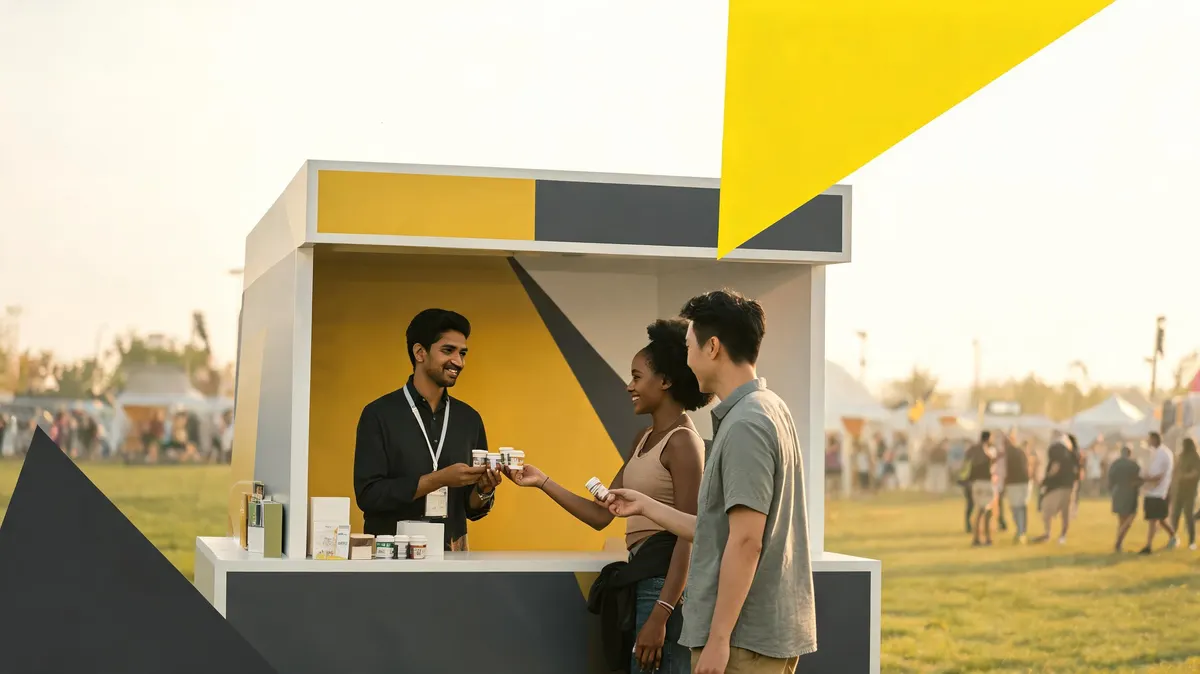
Consumer goods, food and beverage, personal care, and apparel brands often need a reason to exist at an event beyond a logo. Sampling activations — where attendees receive, taste, or try a product — are among the highest-conversion touchpoints in experiential marketing. Statista's experiential marketing data shows that product sampling at live events converts to purchase intent at rates 2-4x higher than traditional digital advertising. Design the activation space to be photogenic and socially shareable — a well-designed sampling station generates organic social content that extends reach well beyond the event day itself.
For Brand Awareness in a New Segment
A brand entering a new demographic — say, a regional bank trying to reach first-generation college students, or a health system trying to build trust with a Latino community — needs more than a logo. They need contextual credibility. Activations that work here: co-presented programming or panels (brand hosts a relevant conversation topic as part of your event schedule), community giving moments (brand makes a visible donation or match tied to a specific cause your audience cares about), and photo or content moments designed to generate organic social documentation by attendees. None of these require a large physical footprint — they require thoughtful alignment between brand and audience context.
For Client and Employee Entertainment
B2B brands and professional services firms often want to use event sponsorship as a hospitality tool — a reason to invite clients to something memorable that strengthens the relationship. Activations for this objective: VIP area naming rights (brand hosts their clients in a designated lounge), private pre-event reception in a venue space, curated access to talent or speakers, and branded gifting moments (guests leave with something tangible connected to both the brand and the event). These activations command significant price premiums because the brand's internal ROI calculation is direct — strengthened client relationships, not abstract impressions.
For Data Collection
Increasingly, sophisticated sponsors want to come away from an event with usable data, not just exposure. This means: sponsored survey stations (brand sponsors an on-site or post-event survey in exchange for access to aggregated results), opt-in sweepstakes with demographic collection, or lead-scanning technology at a demo booth. If your event app or registration system collects attendee data, a co-branded data deliverable — an anonymized audience report showing purchasing behavior, lifestyle preferences, or professional attributes — is a high-value asset you can monetize at the Gold tier. Deloitte's marketing insights research consistently flags first-party data access as a top priority for brand marketing teams post-cookie deprecation.
How to Present Activation Ideas in Your Proposal
Don't dump a list of activation ideas into your proposal and let the sponsor pick. That makes you look like a vendor, not a strategic partner. Instead, research the brand's current marketing priorities — check their recent press releases, their social content, their job postings (which often reveal what they're investing in) — and propose one or two specifically tailored activations that connect their objective to your audience. Then offer a menu of additional options at different price points.
The proposal structure matters too. Activation ideas belong in the value proof section, right after you've established your audience case. Lead with the audience, then show how the activation creates the bridge between that audience and the brand's specific goal. The full proposal structure is covered in the sponsorship proposal writing guide.
Activations That Are Overused and Underfunded
Some activation formats are so generic that brands have stopped seeing them as valuable. Be cautious with: logo on a banner as a standalone activation (this is acknowledgment, not activation), a mention from the MC as the only on-site presence, and a branded table with no staff that turns into a brochure dump by noon. These formats are worth offering at entry-level tiers — but they should never be pitched as an activation to a brand with serious marketing objectives. A brand that sends a real marketing team member to your event expects a setup that justifies their time. Give them one.
Minneapolis-St. Paul Business Journal's coverage of local sponsorship deals shows a consistent pattern: the sponsors who renew and increase their investment are those who got a real activation — something measurable happened during the event. The ones who churn are almost always "logo sponsors" who never had a reason to show up in person.
Activation Run-of-Show: Don't Leave It to Chance
Once you've sold an activation, build it into your event run-of-show with specific timing, staffing, and setup requirements. A sponsor who shows up to find their activation space occupied, their MC mention skipped, or their banner in the wrong location will not renew — regardless of how good the rest of the event was. The activation day checklist covers every logistical detail you need to track on event day.
What to Do Next
Before your next sponsor conversation, pull up their website and their LinkedIn page. Identify one specific marketing challenge they're facing — a new product launch, a new market, a new customer segment. Then build a single activation idea that bridges your event audience to that challenge. That one customized idea will do more to close the deal than any generic package you've ever sent. If you want help building an activation menu that matches what local and national brands are actually funding right now, book a free Xarify audit and we'll build it with you.