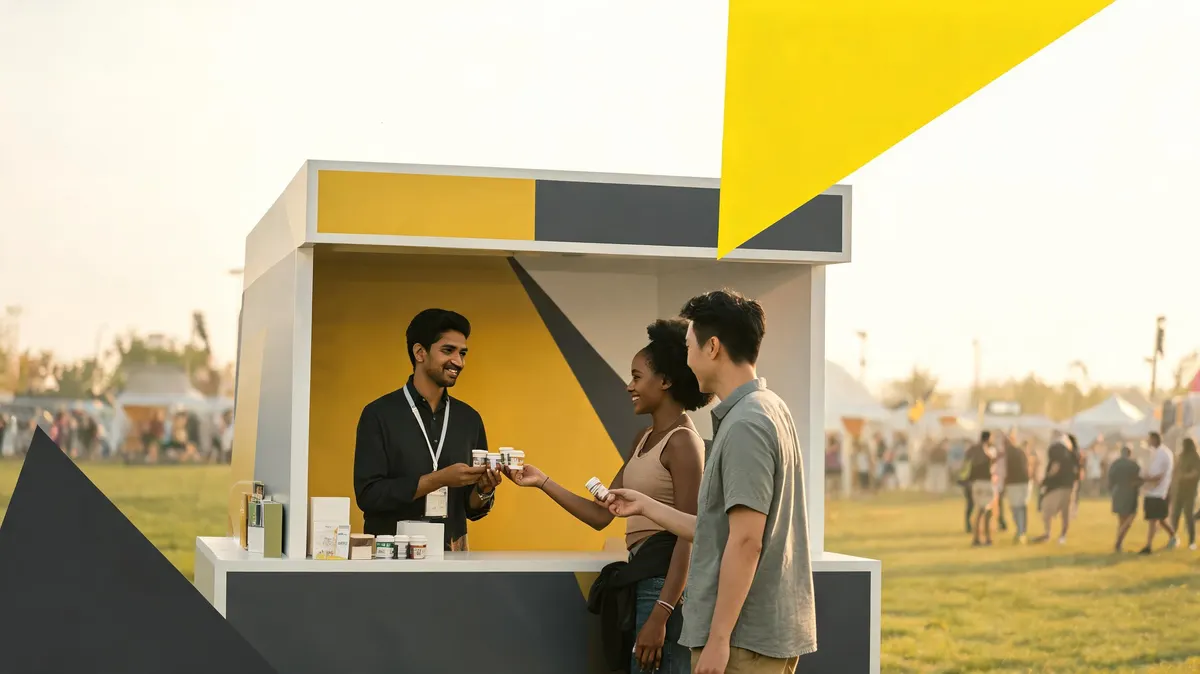
Step and repeat sponsorship has been the backbone of event fundraising packages for two decades. Logo on the banner. Logo in the program. Logo on the website footer. For most of the 2000s and early 2010s, brands accepted this arrangement because it was how the market worked. That era is over. Brand managers today are answering to CMOs who want proof that sponsorships moved a business needle — and a banner logo doesn't move anything measurable.
The Measurement Problem Brands Won't Stop Talking About
The shift didn't happen overnight, but it accelerated sharply after 2020. Post-pandemic budget scrutiny forced every marketing dollar into a performance conversation. Sponsorship budgets, historically managed through relationship-based deals with minimal reporting requirements, suddenly needed to justify themselves against paid digital campaigns that can track clicks, leads, and conversions to the cent.
The Association of National Advertisers has documented this shift extensively: brand managers now rank "ability to measure ROI" as the top factor in sponsorship renewal decisions. A logo on a banner generates zero trackable data. Zero. That's not a minor weakness — it's a structural flaw in the entire traditional sponsorship model. Our piece on honest sponsorship impressions calculation confronts the data gap directly.
What Brands Are Actually Buying Now
Ask a brand manager what they want from a sponsorship in 2026 and you'll hear a consistent set of answers: first-party audience data, experiential touchpoints that generate social content, lead capture opportunities, and category exclusivity they can point to in competitive reviews.
These aren't abstract preferences. They map directly to the metrics that CMOs are tracking:
- Audience data feeds CRM campaigns and reduces paid acquisition costs
- Experiential activations generate owned content (photos, video) that can be repurposed across channels
- Lead capture ties directly to sales pipeline value
- Category exclusivity delivers a competitive moat that has clear strategic value
None of these benefits appear on a step-and-repeat banner. If your sponsorship packages still lead with logo placement, you're selling last decade's product to this decade's buyers. See our full guide to activation ideas that brand managers actually want for concrete alternatives.
The Hot Take: Logo Placement Devalues Your Event
Here's the uncomfortable truth that most sponsorship consultants won't say directly: leading with logo placement doesn't just fail to close deals — it signals that your event doesn't understand modern brand marketing. It tells the brand manager that you view them as a donor, not a partner.
Sophisticated brands — regional banks, healthcare systems, consumer brands building community presence — are raising their standards for what they expect from event partnerships. The Stanford Social Innovation Review has noted that even in the nonprofit sector, corporate sponsors are pushing for mission-aligned activations with measurable community impact rather than passive visibility. The brands that are easiest to close are the ones that feel understood. Logo packages communicate that they aren't.
What the Replacement Model Looks Like
The transition from logo-first to activation-first sponsorship isn't complicated to execute, but it requires a different way of thinking about your event's assets. Instead of packaging logos at tiers, you're packaging experiences, data access, and audience relationships.
A concrete example: instead of "Gold Sponsor — logo on all event signage," consider "Community Partner — branded check-in activation with opt-in data capture, product sampling zone for 300 attendees, and post-event audience report with demographics and survey results." Same event. Completely different value proposition. The second version is what gets a $20,000 check without negotiation.
This is exactly the asset-mapping process that organizers need to do before they build any proposal — our framework for building a comprehensive sponsorship asset inventory walks you through it step by step.
Local Events Are Not Exempt
Some organizers assume this shift only affects large national brands and that local sponsors are still happy with logo placements. That's incorrect. Twin Cities business community reporting has consistently shown that local brands — credit unions, regional healthcare systems, local restaurant groups — are under the same internal ROI pressure as national brands. A local marketing director justifying a $5,000 event sponsorship to their CEO faces the same question: what did we get for it?
If your answer is "a logo on our banner," the renewal conversation will be difficult. If your answer is "two hundred opt-in email contacts, a photo booth activation that generated 400 branded social impressions, and a post-event report showing 65% of attendees matched your target demographic" — that's a sponsor who renews and upgrades. See how this plays out in a real case study at our post on how a Twin Cities nonprofit replaced grant funding in 90 days by restructuring their sponsorship offer.
The Transition Is Not Hard — It Just Requires Honesty
The hardest part of moving away from logo-first sponsorship is admitting that what you've been selling isn't what brands actually want. Once you accept that, the path forward is clear: audit your event's real assets, build packages around experiences and data, and stop apologizing for charging premium rates when you deliver premium value.
Event Marketer's annual research on brand activation spending shows budgets shifting consistently toward experiential over passive placement — a trend that's been running for five straight years. The market has already moved. The question is whether your sponsorship packages have moved with it.
What to Do Next
If your sponsorship packages still look like they were built in 2012, it's time for a rebuild. Book a free Xarify audit and we'll map what your event actually has to offer, price it correctly, and help you build packages that modern brand managers will pay for without a negotiation fight. Or review our full service options to get started.