Food festival sponsorship is fundamentally different from music or sports sponsorship because the audience is in an active purchase mindset. They came to eat, taste, and discover new products. That behavioral state is exactly what consumer packaged goods (CPG) brands, beverage companies, and specialty food producers will pay a significant premium to access. The organizers who understand this price food festival sponsorship correctly; the ones who do not treat it like banner space and leave serious money behind.
Why Food Festival Audiences Are Different
At a music festival, a sponsor has to interrupt an experience to get brand attention. At a food festival, tasting IS the experience. A brand that samples their product at a food festival is not interrupting — they are contributing to the reason people came. That distinction changes the value equation dramatically.
According to Event Marketer's field marketing research, in-person product sampling at events converts to purchase at 2–5x the rate of digital advertising for CPG categories. Brands with new product launches, reformulated products, or regional expansion goals will prioritize food festival presence specifically because they cannot replicate that conversion rate online. You are not selling them a logo. You are selling them a sales channel.
The Sampling Rights Asset
Sampling rights are a distinct, premium asset — not a feature of a general sponsorship tier. Price them separately and sell them with defined parameters:
- Exclusive category sampling rights: One beverage brand, one snack brand, one condiment brand, etc. No competitor may distribute samples on festival grounds. This is the highest-value version and should carry a significant exclusivity premium.
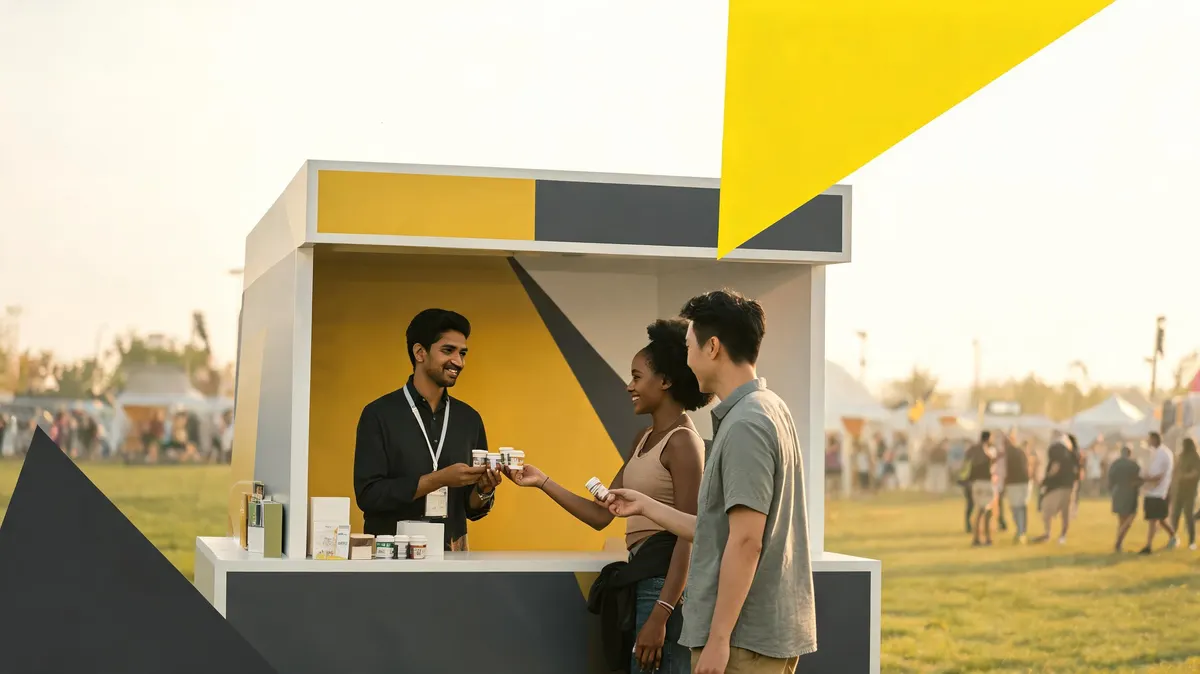
- Branded sampling station: A permanent, staffed location within the festival footprint where the sponsor distributes samples with brand presence. Specify location (entry path vs. main zone vs. secondary area), staffing expectations, and hours.
- Roaming sampling: Brand ambassadors moving through the crowd with product trays. Requires coordination with your operations team and a defined territory. Works well for beverage and snack brands.
- Sample inclusion in welcome/VIP bag: Product placement in a curated bag given to ticket purchasers or VIP guests. Fixed quantity, high brand association value.
The International Festivals and Events Association treats sampling activation as a premium category in their sponsorship valuation frameworks — price it accordingly, not as a free add-on to a logo deal.
Branded Zones and Food Court Sponsorship
A food festival's layout is itself a sponsorship asset. The entry gate zone, the main food court, the craft beer garden, the dessert alley, the kids' food zone — each is a brandable territory with its own audience profile and traffic pattern. Selling zone naming rights allows brands to own a physical footprint beyond a single booth:
- "The [Beverage Brand] Craft Beer Garden" — ownership of the entire beer area, including all signage, PA mentions, and ambient branding
- "The [Bank] Family Food Zone" — family-appropriate section with co-branded activities and signage reaching parent-child household units
- "The [Grocery Chain] Chef Stage" — naming rights to a demonstration cooking stage where chefs use and recommend the sponsor's products
Zone naming at a well-attended food festival can justify $10,000–$40,000 depending on traffic and exclusivity. The chef demonstration stage is particularly valuable because it creates live, organic branded content — video of a chef recommending your product to 200 live viewers and 1,000+ social followers is earned media, not just sponsorship. For a fuller treatment of how to structure and price named zones and stages, see our music festival sponsorship playbook.
Matching Brands to Food Festival Inventory
Not every brand is the right fit for every food festival. Match based on audience and festival theme:
- CPG food and beverage brands (both national with regional activation budgets and local artisan brands seeking growth)
- Grocery chains and specialty retailers (want to be associated with food culture and local sourcing trends)
- Kitchen and home goods brands (cookware, appliances, small gadgets — chefs and food enthusiasts are their core customer)
- Restaurant and delivery apps (food-adjacent tech with local expansion goals)
- Agriculture and farming brands (particularly relevant for farm-to-table or culturally specific food festivals)
- Financial services (credit cards with dining rewards programs, BNPL apps for restaurant equipment)
Regional brands are often more accessible entry points than national CPG. A local hot sauce brand or craft brewery may have a $5,000–$15,000 activation budget and a strong motivation to reach exactly your audience. Start local, scale to national over time. For an overview of how Twin Cities brands approach local sponsorship, see our guide to Minneapolis brands and local event sponsorship.
Pricing Sampling Activations
The mistake most food festival organizers make is charging for booth space and calling it a sponsorship. A sampling activation is worth far more than booth rental. Price it as a combination of:
- Distribution value: Number of samples distributed × cost per sample acquisition via other channels (typically $3–$8 per trial for CPG brands). A 2,000-sample distribution at $5 per sample = $10,000 in value before any branding.
- Branding value: Impressions delivered via signage, social, email, and PA mentions, priced at your standard CPM.
- Exclusivity premium: 25–40% addition for category exclusivity.
When you present this math to a brand's marketing team, the activation price justifies itself. Most food festival organizers charge $2,500 for something worth $15,000 because they never ran the numbers. Statista's food and beverage industry data shows CPG brands spend billions annually on in-store sampling programs — your festival sampling opportunity competes with those programs. Price it in that context. For the foundational pricing formula, see our guide to pricing sponsorship packages.
Activation Day Logistics That Protect the Deal
A sampling activation that goes wrong — product ran out at noon, staffing was inadequate, location was poorly trafficked — will not renew. Build activation logistics into the sponsor agreement:
- Define minimum sample quantity commitments and restocking responsibility
- Specify setup time, branded materials dimensions, and power requirements
- Assign an on-site point of contact from your team to each activation
- Collect activation photos and attendance data during the event for the wrap report
Nonprofit Quarterly's research on partnership management highlights that operational execution quality is the number one factor driving renewal decisions for experiential sponsors. Deliver on the logistics and your renewal rate will reflect it.
What to Do Next
If your food festival's sponsorship revenue is capped by booth rental pricing, you are undervaluing your most differentiated asset: a captive, food-motivated audience in purchase mode. Build sampling activation packages with real distribution data, match the right brands to your audience, and price on value delivered — not on what other festivals charge.
Xarify builds food festival sponsorship programs from asset inventory to closing. Book a free sponsorship audit to find out what your festival is worth to the right brand partners.