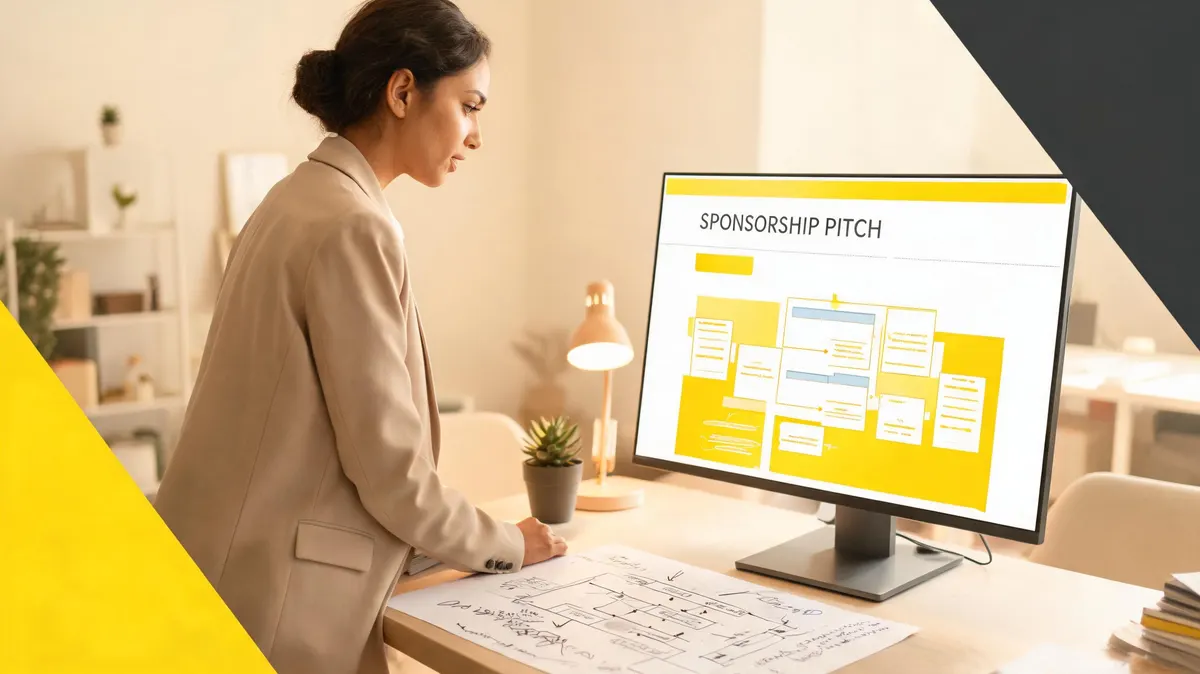

Nonprofits that pursue both grants and sponsors often make a silent, costly mistake: they produce one document and try to adapt it for both audiences. The grant narrative becomes a pitch deck with the logo of a brand dropped in. Or the pitch deck becomes a grant application with a logic model appended. Neither works, and the failure is structural — not cosmetic. These two documents exist to do fundamentally different things for fundamentally different readers.
What a Grant Application Is Actually Trying to Do
A grant application is an argument for mission alignment and organizational competence. You are telling a program officer: our work addresses a problem your foundation cares about, we have the capacity to execute it, and we can prove outcomes. The entire document is structured around that argument.
Grant applications are long by design. They require narrative depth because the reader needs to evaluate mission fit, organizational health, and evaluation rigor before approving a disbursement. A grant application that is short and visual will be read as shallow. Foundation staff are trained to look for substance, not aesthetics.
Core sections of a grant application:
- Executive summary / statement of need
- Organizational history and track record
- Program description and theory of change
- Goals, objectives, and measurable outcomes
- Evaluation methodology
- Budget and budget narrative
- Sustainability plan
- Letters of support / organizational attachments
According to Candid's proposal writing resources, the most common reason grant proposals are declined is misalignment with the foundation's stated priorities — not weak writing. The document is a tool to prove alignment, not to impress.
What a Sponsorship Pitch Deck Is Actually Trying to Do
A sponsorship pitch deck is a sales document. Its job is to make a brand manager say "yes" in a meeting — or at minimum, forward it to their director with a recommendation. It is not a mission statement. It is not a program description. It is an audience profile wrapped in brand activation opportunities.
Sponsors read pitch decks under time pressure, often on a phone or laptop between other meetings. If your deck takes more than three minutes to get to "here's what you get," you've already lost them. The first slide that matters is the audience slide — who attends, who watches, who engages. That is the asset. Everything else is packaging.
Core sections of a sponsorship pitch deck:
- Audience overview: demographics, size, engagement profile, purchase behavior
- Sponsorship tiers and pricing: clear, named levels with specific deliverables
- Activation menu: concrete options for how the brand shows up — signage, sampling, digital, content
- Proof of past performance: attendance numbers, social stats, media coverage from prior years
- Brand alignment statement: brief, visual — why this audience is your audience
- ROI indicators: estimated impressions, engagement benchmarks, value equivalency
- Next steps / contact: one clear ask
The IEG sponsorship evaluation framework is explicit: the first question any brand evaluator asks is "does this audience match our target?" If your deck doesn't answer that on page two, it goes into the no pile.
The Anatomy Comparison
| Element | Grant Application | Sponsor Pitch Deck |
|---|---|---|
| Length | 8–20 pages narrative | 10–14 slides, visual-first |
| Opening | Statement of need, mission | Audience data, reach numbers |
| Primary persuasion | Mission alignment, impact evidence | Audience value, activation options |
| Financial content | Detailed budget, restricted spend categories | Tier pricing, ROI estimate |
| Design standard | Clean, formal, text-dominant | Brand-quality visual design |
| Key language | Beneficiaries, impact, outcomes, equity | Audience, activation, impressions, ROI |
| Decision driver | Mission fit + org capacity | Audience match + brand activation |
The Mistakes Nonprofits Make When They Cross the Streams
The most common version of this mistake: a nonprofit takes its grant proposal, swaps in a brand's logo on the cover, and emails it as a "sponsorship proposal." The document leads with mission narrative, includes a budget breakdown, mentions "beneficiaries served" three times, and ends with a logic model. The brand manager reads two pages and stops.
The brand manager doesn't care about your theory of change. They care about their customer, their brand, and their Q3 activation budget. Your mission is not irrelevant — but it belongs in one sentence in the brand alignment section, not as the organizing frame for the entire document.
The reverse mistake is less common but equally damaging: submitting a visual, brand-forward pitch deck to a foundation program officer and expecting it to replace a proper grant narrative. Foundations want depth. A beautiful deck signals marketing savvy but not programmatic rigor.
The Nonprofit Quarterly has documented this pattern repeatedly: organizations that fail to secure corporate sponsorships are often submitting documents that were built for a grant officer, not a marketing budget holder.
What the Sponsor Deck Needs That Grant Apps Never Require
Three things appear in strong sponsorship pitch decks that have no place in a grant application:
- Audience psychographics: Not just who attends — what they value, what they buy, what they do on weekends. This is the data that makes brand managers pay attention.
- Activation concepts: Specific, visual ideas for how the brand shows up. "Logo on signage" is not an activation. A branded sampling station, a co-created content moment, or a named sponsor stage with custom experience — those are activations.
- Competitive exclusivity: Sponsors want to know they're the only bank, the only beer, the only insurance brand in their category. Grant applications never offer exclusivity because foundations don't compete.
If your current pitch deck lacks any of these three, you're leaving serious money on the table. The Xarify Capture Engine is built to develop exactly these assets — audience profiles, activation menus, and exclusivity frameworks — before you approach a single sponsor.
Rebuilding Your Deck the Right Way
Start with your audience data. Pull every piece of demographic and psychographic information you have — registration data, survey responses, social analytics, ticket purchaser profiles. That becomes slide two of your new deck (slide one is the hook: your reach number and a single compelling audience stat).
Then build your tier structure. Three to five tiers, named clearly, with specific deliverables listed for each. Brands need to see what they're buying before they can say yes. Vague benefits packages kill deals.
Close with activation concepts, not a mission statement. Give the brand something to visualize: their product in your attendees' hands, their name on the stage, their content in your email newsletter. That visualization is what closes a sponsorship deal in a meeting room.
For step-by-step guidance, the Xarify process page walks through how we build sponsor-ready pitch assets from scratch, including for organizations that have only ever operated in the grant world.
Bottom Line
A grant application and a sponsorship pitch deck are not the same document. They don't have the same audience, the same purpose, or the same structure. The fastest way to lose a sponsor is to send them a grant application in a different font. Build the right document for the right reader, collect the audience data your sponsor needs to say yes, and stop treating your mission narrative as a sales tool. It isn't one — but your audience is. For a related breakdown of how this shows up in post-event reporting, read our piece on grant reporting vs sponsor reporting. And if you're ready to rebuild your deck from the ground up, book a Xarify audit as your starting point.