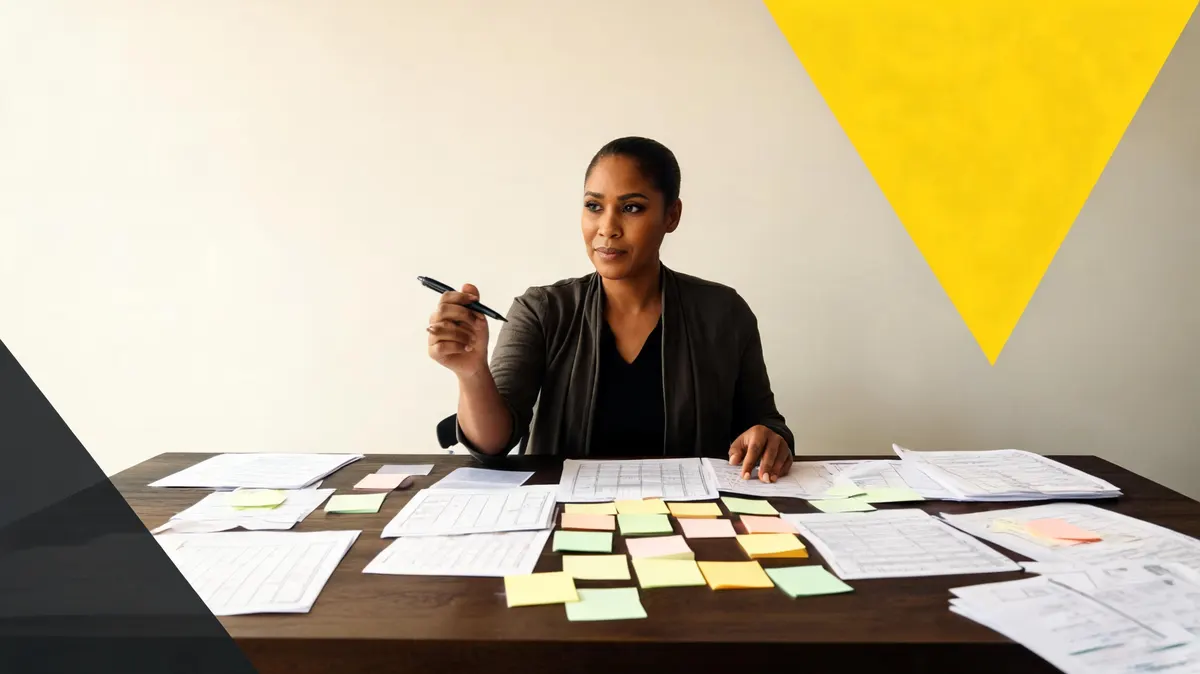

The first sponsor meeting is where most deals die — not because the organizer is inarticulate, but because they walk in with the wrong goal. They want to present. The sponsor wants to be heard. When the organizer spends 20 minutes talking and the sponsor spends five, the meeting ends with a "we'll think about it" that never converts. This walkthrough is a composite drawn from multiple real first meetings we've observed and coached, anonymized to protect the specifics. The patterns are accurate.
The Setup: Who Was in the Room
Marcus ran a three-day outdoor food and beverage festival in the northeast Minneapolis corridor. Attendance averaged 4,200 over the weekend. He had two existing sponsors — a local grocery chain at $6,000 and a regional bank at $3,500 — both relationships that had started through personal connections rather than outreach. His target for the first new meeting: a regional outdoor equipment retailer with an active community events program.
He had done his homework. He'd read the retailer's community partnerships page, noted their recent trail maintenance sponsorship, and looked up the marketing manager's LinkedIn profile. He knew her name was Jordan, that she'd been in the role 18 months, and that her team had recently launched a "local explorers" brand campaign aimed at 25-to-44-year-old active adults in the metro. Marcus's festival attracted exactly that demographic — he had the numbers to prove it from his prior-year ticket data.
He went in with one printed page and three questions. Not a deck. Not a folder of materials. One page and three questions. That constraint came from advice we give consistently: the first meeting is a discovery call, not a sales presentation. If you arrive having already decided what you're going to offer, you've skipped the most important part of the process. Our guide on sponsorship pitch mistakes that lose deals in 30 seconds goes deeper on this.
The First Fifteen Minutes: What He Said and What He Heard
Marcus opened with two minutes on the festival — dates, attendance, general vibe. Then he stopped talking and asked his first question: "Your local explorers campaign — what does success look like for that program in 2026?"
Jordan talked for eight minutes. She described the campaign's goal of moving beyond transactional gear purchases toward community identity — the brand wanted to be associated with the experience of being outdoors in Minnesota, not just with the equipment you buy to do it. She mentioned that their previous sponsorships had been primarily logo placements at larger events and that the team was "trying to figure out what actually moves the needle."
That eight minutes was the most valuable part of the meeting. Marcus learned two things he couldn't have found on the brand's website: (1) they were frustrated with passive logo placements and wanted something more active, and (2) they had internal pressure to justify sponsorship spend with measurable outcomes. The first told him what kind of activation to propose. The second told him what kind of post-event report would matter.
He asked his second question: "When you've seen a community sponsorship really work for the brand, what made it different?" Jordan described a trail cleanup event the brand had co-hosted with a local land trust — branded but genuinely useful, high-quality social content, and a follow-up story in a regional outdoor publication. Marcus filed that away: this brand valued earned media, not just impressions.
The Middle: Where It Almost Went Wrong
Twenty minutes into the meeting, Marcus made a move that almost derailed the whole conversation: he flipped to the back of his one-pager and started walking through his sponsorship tiers. Bronze, Silver, Gold. Jordan's body language shifted immediately — she sat back slightly, her note-taking stopped. She'd been in discovery mode. Now she was in evaluation mode, and she hadn't asked to go there yet.
He caught it. He stopped mid-sentence and said: "Actually, let me save this. I want to make sure I'm building the right package before I talk numbers. Can I send you something more specific next week after I've thought through what would actually make sense for your campaign?"
Jordan said yes immediately. That pivot — from presenting to listening, from closing to continuing — was the move that kept the deal alive. Harvard Business Review's research on consultative selling is consistent on this point: buyers disengage when sellers move to proposal mode before the buyer has fully articulated their needs. The same dynamic applies to sponsorship sales.
He asked his third question: "What's your typical decision process for something like this — who else needs to be involved, and what timeline makes sense for you?"
Jordan told him there were two approvals: her direct manager and the brand's community affairs lead. Decisions typically took three to four weeks once a proposal was in. Marcus now had a timeline, a contact map, and a clear next step.
The 48-Hour Follow-Up
Marcus sent a follow-up email 36 hours after the meeting. Not a thank-you note. A short email with three specific things: (1) a one-paragraph summary of what he'd heard in the meeting about the local explorers campaign goals, (2) two activation concepts he'd thought of based on that conversation — one experiential, one content-focused — and (3) a question about whether a proposal incorporating those concepts would be worth building.
Jordan replied within four hours. She said yes to the proposal and added one piece of information he hadn't asked for: their budget range for community sponsorships at his scale was $8,000 to $14,000. He now had a pricing floor and ceiling before he'd written a single proposal line.
That follow-up format — summary of what you heard, two targeted ideas, one question — is something we teach in almost every engagement. It accomplishes three things simultaneously: it proves you listened, it demonstrates creative competence, and it advances the conversation without being pushy. Most organizers either send a generic thank-you or go straight to a full proposal. The in-between step is where the deal accelerates. For more on how to structure the proposal that follows, see our post on writing a sponsorship proposal that closes.
What the Proposal Looked Like
Marcus sent his proposal seven days after the follow-up email. It was five pages. Page one: a one-paragraph recap of the brand's stated goals. Page two: audience data — demographics, geographic distribution, and a comparison to the retailer's stated target segment. Page three: two activation concepts, each described in plain language with a rough build-out plan. Page four: pricing — two tiers at $9,500 and $13,000, each mapped to one of the activation concepts. Page five: logistics and timeline.
He did not include logo placement as a primary asset. He mentioned it in passing as one element of a broader package. That omission was intentional — based on what Jordan had told him, passive logo placements were exactly what they were trying to move away from. Proposing something they'd already decided didn't work would have signaled that he hadn't listened. According to Event Marketer, brands increasingly prioritize experiential and data-driven sponsorship assets over traditional logo placements — a trend that has accelerated as marketing teams face greater accountability for community investment spend.
Results
The deal closed at $12,500 — the higher-tier activation concept with one modification the brand's community affairs lead requested. From first meeting to signed contract: 31 days. The activation generated 14 pieces of organic social content from attendees, one write-up in a regional outdoor blog, and a renewal conversation that started before the event even ran. According to Event Industry News, sponsor retention rates climb significantly when activations generate organic social content — because both the brand and the organizer can point to tangible output beyond logo placement.
Marcus told us afterward that the thing he'd most underestimated was how much the three-question format had changed the dynamic. "I'd been going into sponsor meetings and talking for 20 minutes. This time I talked for maybe seven minutes total in the first meeting. And the deal was better."
The discipline of asking before presenting is hard to internalize when you're anxious about the outcome. But it's the single most consistent variable we've seen across successful first meetings. IEG's best practices research consistently identifies sponsor fit and genuine dialogue as the primary drivers of deal quality — not the size of the proposal deck.
For a deeper look at how to structure the assets you'll reference in these meetings, our post on building your sponsorship asset inventory is the right starting point.
What to Do Next
If you have a first sponsor meeting coming up, walk in with one page and three questions. Don't try to close. Try to understand. Everything else — the proposal, the pricing, the activation — is easier when you've heard what the brand actually needs.
If you want a structured process for preparing for that meeting and building the proposal that follows, book a free sponsorship audit with Xarify. We'll help you inventory your assets, identify your best-fit prospects, and build a first-meeting framework before you sit down across from anyone.